“A lie may buy you time, but truth will buy you freedom.”
NON-FICTION · PSYCHOLOGY · ETHICS
The Price of Lifeand Cost of Lies
Brice Neilson
Influence without restraint is manipulation, persuasion without principle is tyranny. But influence guided by ethics is stewardship of truth.
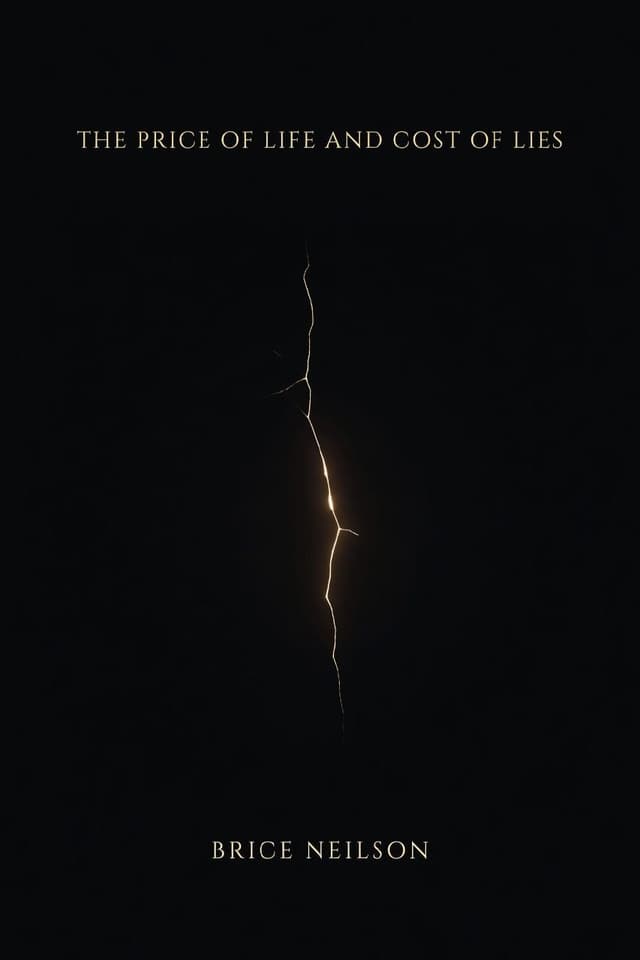
“A lie may buy you time, but truth will buy you freedom.”
— Brice Neilson, The Price of Life and Cost of Lies
FROM THE PAGES
“The mask cracked, and behind it was not weakness but humanity.”
“Help people. Or at the very least don’t hurt them.”
“The wound of honesty heals faster than the infection of silence.”
“When you lie long enough, you forget the sound of your own voice.”
“Influence without ethics is manipulation. Persuasion without principle is tyranny.”
ABOUT THE BOOKPart I Part II Part III Part IV
What This Book Is About
A practitioner’s synthesis — twenty years in policing, interrogation, and undercover operations examined through Nietzsche, Jung, Freud, Maslow, Cialdini, Greene, and Peterson. Not theory alone. A framework forged in interrogation rooms, tested in courts, and built for every human who has ever had to navigate the tension between truth and the cost of saying it.
This book covers four territories: the philosophy and psychology of why we lie; the neuroscience of confession and relief; the practice of ethical influence in policing, leadership, and beyond; and finally, what it means to live truthfully in a world that rewards the mask.
It draws on evolutionary biology, clinical psychology, and behavioural science to explain why deception is hardwired — and why truth, despite its cost, is the only sustainable path. From Nietzsche’s will to truth to Cialdini’s principles of influence, from Jung’s shadow to the neuroscience of stress and relief — each chapter bridges theory and practice through real cases, real operations, and real consequences.
This is not a self-help book. It is a practitioner’s framework for understanding how influence works, why it matters, and what happens when it is wielded without ethics.
The Architecture of Truth and Lies
Philosophy, psychology, and why we lie — Nietzsche, Jung, Freud, Maslow, Greene, Cialdini, Peterson
The Science and Practice of Confession
Neuroscience, prediction error, stress biology, and how confession produces relief
Influence, Interrogation, and Ethics
The McGarry case, undercover operations, informant psychology, and the ethics of ethical influence
Living Truthfully
Applying these principles beyond policing — leadership, parenting, healthcare, diplomacy
The framework in this book draws on real casework, including R v McGarry[2012] QSC 432, in which the Queensland Supreme Court upheld a confession obtained using the principles described here as lawful, voluntary, and admissible.
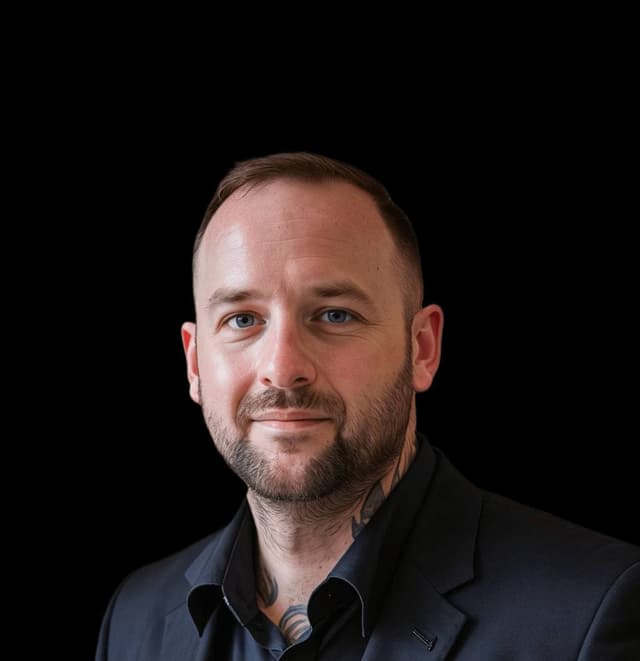
THE AUTHOR
Brice Neilson
Fifteen years with the Queensland Police Service — frontline policing, major crime investigations, organised crime taskforces, and covert undercover operations infiltrating criminal networks. Brice worked at the coalface of human deception: extracting confessions, recruiting informants, and living under assumed identities where a single mistake could be fatal.
After policing, Brice moved into executive leadership across government and the private sector — bringing the same framework of ethical influence into boardrooms, strategy, and high-stakes decision-making. Twenty-two years of experience across the full spectrum of human behaviour.
He writes not as a theorist but as someone who has spent two decades asking the hardest questions from the closest possible distance.
15 yrs Queensland Police ServiceExecutive LeaderAuthor
- ★Premier’s Award for Excellence — Queensland Government
- ★Damian Leeding Memorial Award — Ethical and Diligent Service